



You need an account to access this content
Create a free account and get access to all downloads and more!

Expert blogs

10 Feb 2026
5 min read
Article originally published on Data Centre Frontier.
In the datacentre industry, reliability isn’t optional; it’s everything. Power continuity must be absolute, system redundancy proven, and downtime near zero. For decades, datacentre owners have relied on PLC-based control systems to meet these expectations. However, as technology and infrastructure demands evolve, so too must the control solutions that power them.
ComAp’s standardised control architecture offers a smarter, faster, and more cost-effective alternative that delivers the performance of traditional PLC systems without the complexity and risk.
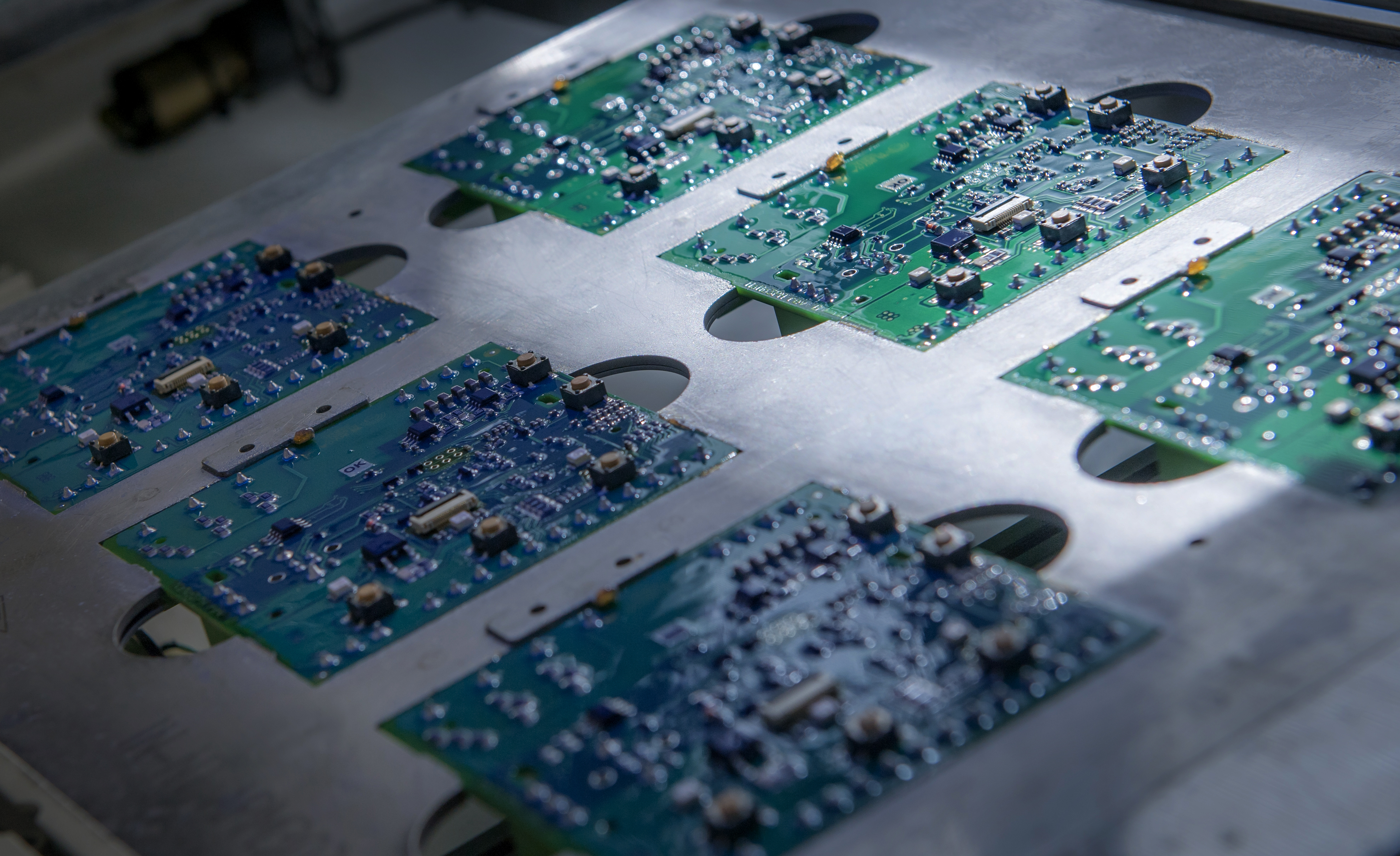
PLC-based control systems have long been the default choice for complex datacentre applications. They are flexible and programmable, but this flexibility often comes at a cost. Each PLC-based system is essentially a custom design, coded, integrated, and supported by a specific engineering team or contractor.
Every installation is unique, and when problems arise, only those who wrote the code fully understand it. For datacentre owners, this creates a major operational risk: vendor lock-in. If the integrator moves on, the code becomes a black box that is difficult and costly to maintain.
PLC systems also pose commissioning challenges. Debugging custom code can take weeks, with multiple contractors on-site waiting for revisions. During this period, diesel generators or load banks often remain online, consuming fuel and generating costs while testing continues.
According to Cushman & Wakefield, building 1 MW of critical IT load for a datacentre can cost up to USD 15 million. Industry practice places commissioning labor and testing at approximately 3% of total project cost, which equates to about USD 450,000 per MW. Extended on-site debugging, additional testing and fuel use can push this figure higher. However, with appropriate, standardised control technology, a significant proportion of these commissioning costs can be saved.
Despite these inefficiencies, many engineers still rely on legacy design specifications written before the introduction of purpose-built controllers. As a result, PLC-based solutions continue to be specified simply because that is how it has always been done.
However, datacentres have changed and so have the tools available to manage them. Today’s facilities demand not only high performance but also flexibility, cybersecurity, global support, and ease of maintenance.
This is where ComAp’s standardised solution represents a new way forward.
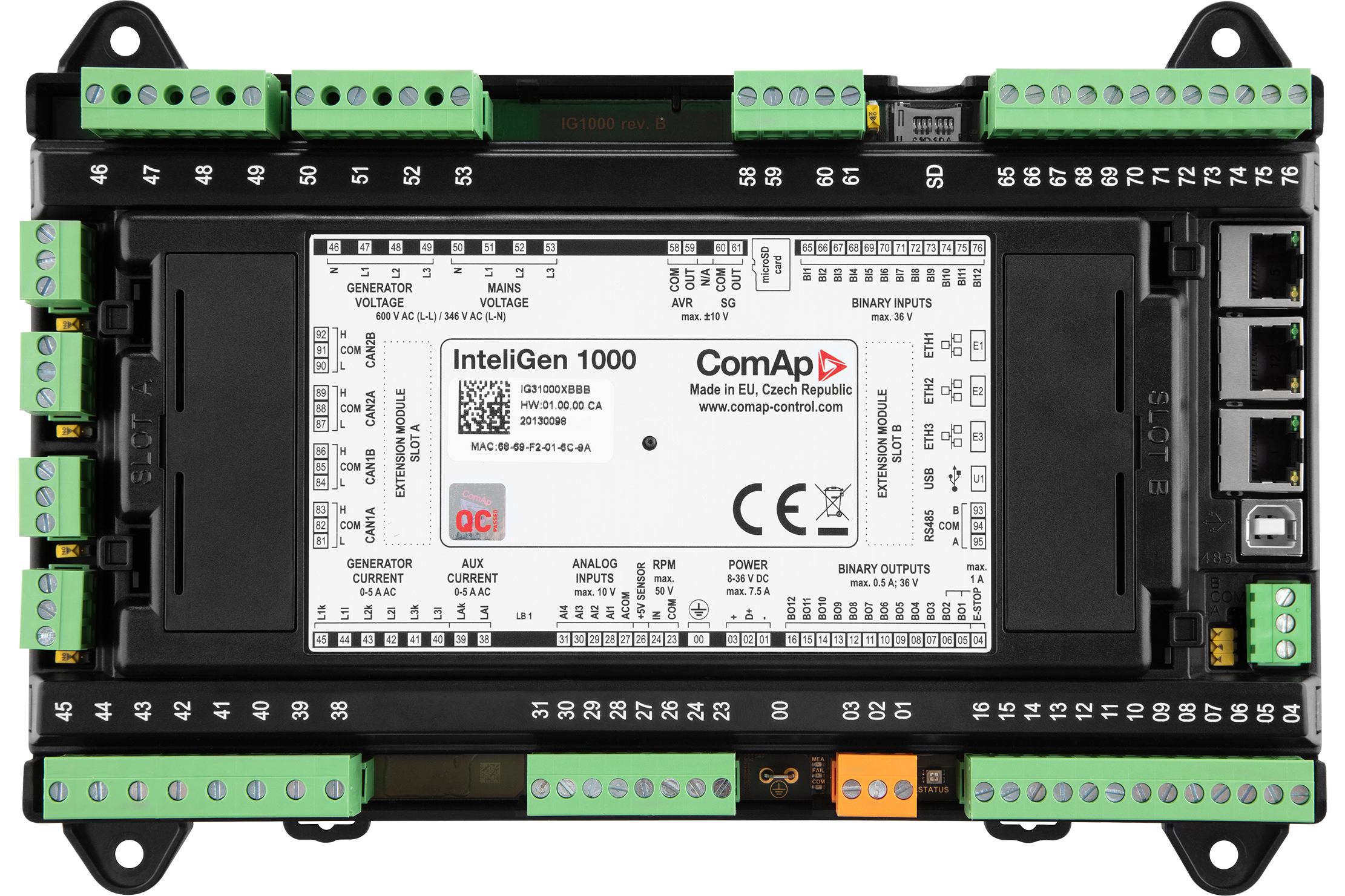
ComAp’s standardised solution offers a modern control architecture with functions designed specifically for multi-gen and datacentre applications. Unlike PLC-based systems, it does not require custom programming for each installation. Instead, it delivers built-in, field-proven functions that make it easier to design, commission, and maintain even the most complex systems.
With pre-configured capabilities and an intuitive interface, ComAp’s solution significantly reduces commissioning time and risk. Engine start-up, synchronisation, load sharing, and redundancy functions are embedded within the solution and adjusted through simple parameter settings rather than written from scratch. The result is faster deployment, less debugging, and lower costs.
Datacentre owners using this solution report major reductions in installation and maintenance costs, along with improved uptime and operational simplicity.
While ComAp’s solution uses standardised control logic, it remains highly flexible. The control system includes a free PLC interpreter that allows engineers to customise logic through parameter configuration rather than complex coding. This approach combines the reliability of a standard solution with the adaptability required for unique project needs.
ComAp’s design philosophy is based on simplifying integration and giving operators more control without unnecessary complexity. Whether operating a single-site backup system or a multi-megawatt redundant power network, ComAp’s solution scales effortlessly. It supports up to 64 controllers on CAN, offers double inter-controller bus redundancy, and is compliant with global grid codes.
Cybersecurity is built in from the start, incorporating cybersecurity features that protect critical infrastructure against digital threats, ensuring that datacentre operators can trust both the reliability and security of their power systems.
Another major advantage of standardised control systems is serviceability and support availability. Because ComAp operates through a strong global network of subsidiaries and distributors, datacentre owners are never dependent on a single integrator or service company. This availability is a key advantage over PLC-based products, giving customers direct access to manufacturer-backed experts for support, updates and training whenever needed.
This global accessibility removes the “black box” problem of PLC-based systems. Owners remain in control of their infrastructure, supported by certified ComAp professionals who understand the product inside and out.
In an industry where downtime is measured in millions of dollars, simplifying control architecture is not just convenient; it is critical for business continuity. ComAp’s solution provides a proven, standardised, and scalable solution that reduces commissioning time, cuts costs, improves reliability, and removes the risks associated with bespoke PLC programming.
By replacing complexity with standardisation and dependency with flexibility, ComAp helps datacentre owners take control of their energy systems with confidence and ensures power reliability that is as smart as it is secure.
-off-grid.jpg?f=Avif&w=600&h=440&t=34&l=0&cw=4032&ch=2956&q=70&v=639070169905393967)


.jpg?f=Avif&w=600&h=440&t=48&l=0&cw=5712&ch=4188&q=70&v=639033106938047093)


